Why Headwaters Matter
Headwaters are the starting points of river systems.
They are often small, overlooked, and easily altered, yet they influence how water moves, is stored, and is released across entire catchments.
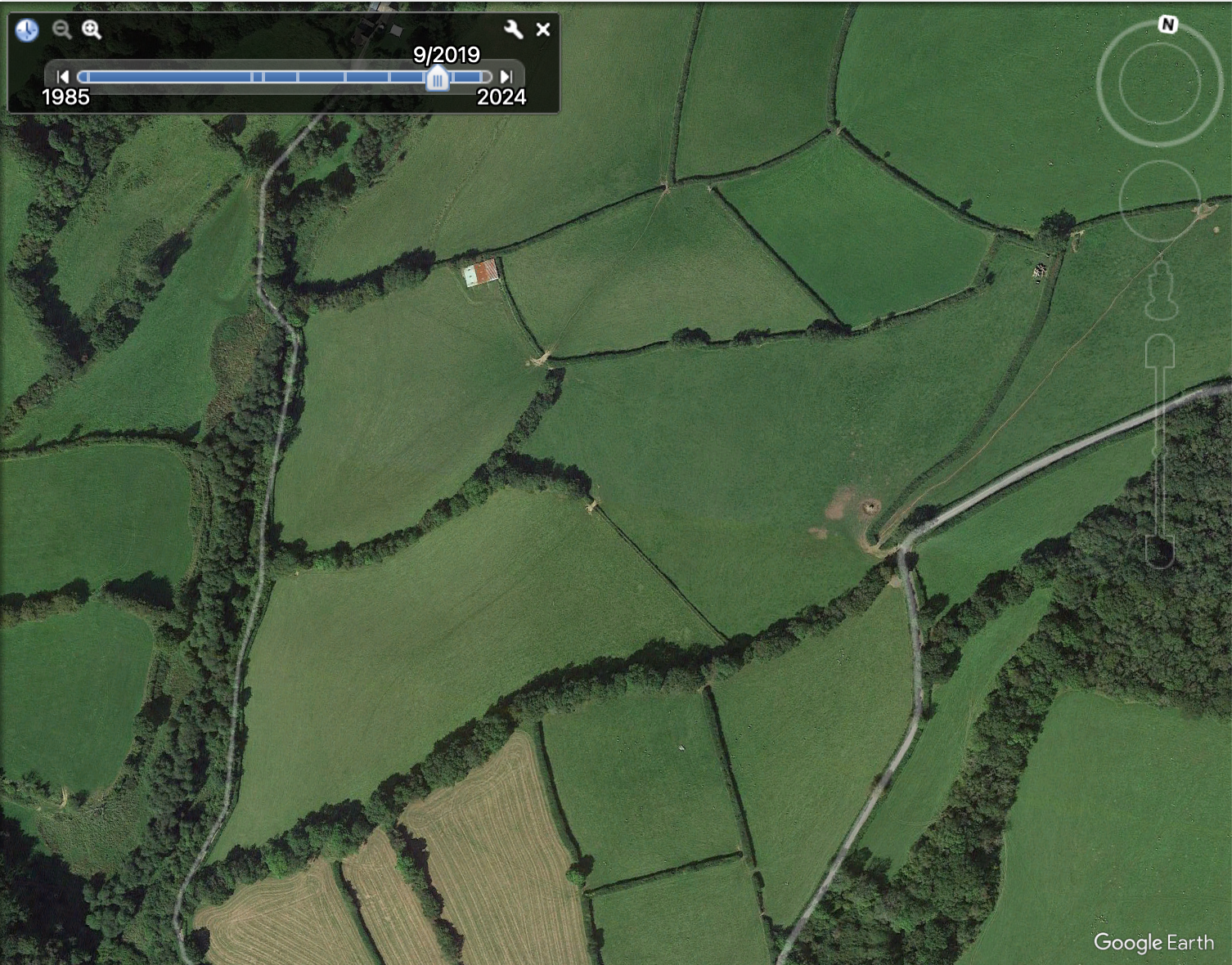
Wildwood Grove sits within one of these headwater systems.
What headwaters are
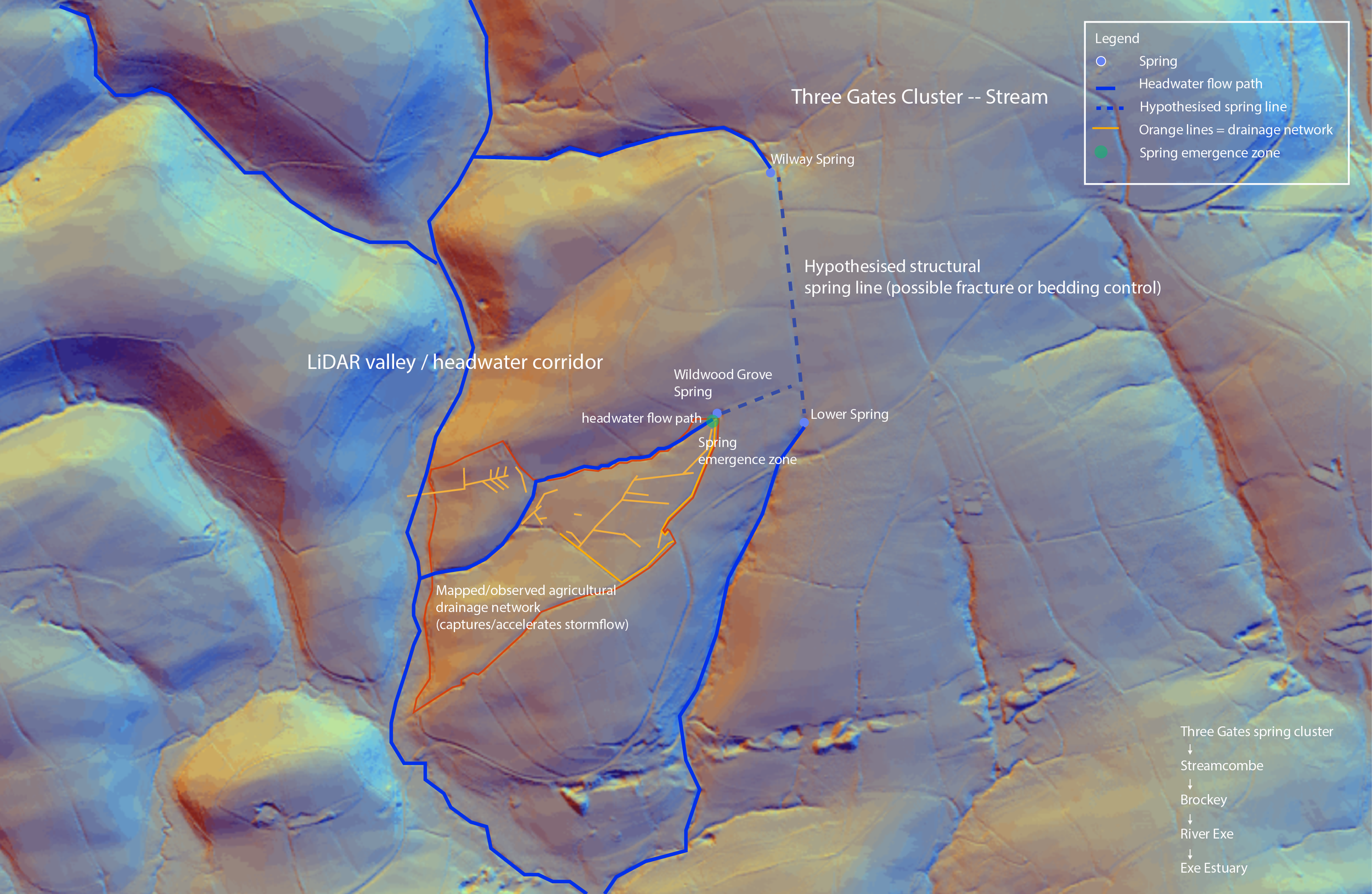
Headwaters are the uppermost parts of a river network, where water first emerges from the ground and begins to move across the land.
They are often formed by springs, seepage zones, and small channels that connect together to form larger watercourses.
These systems are shaped by the land itself, with valleys, slopes, and soil determining how water collects and flows.
Why they matter
Although small in scale, headwaters influence water systems far beyond their immediate location.
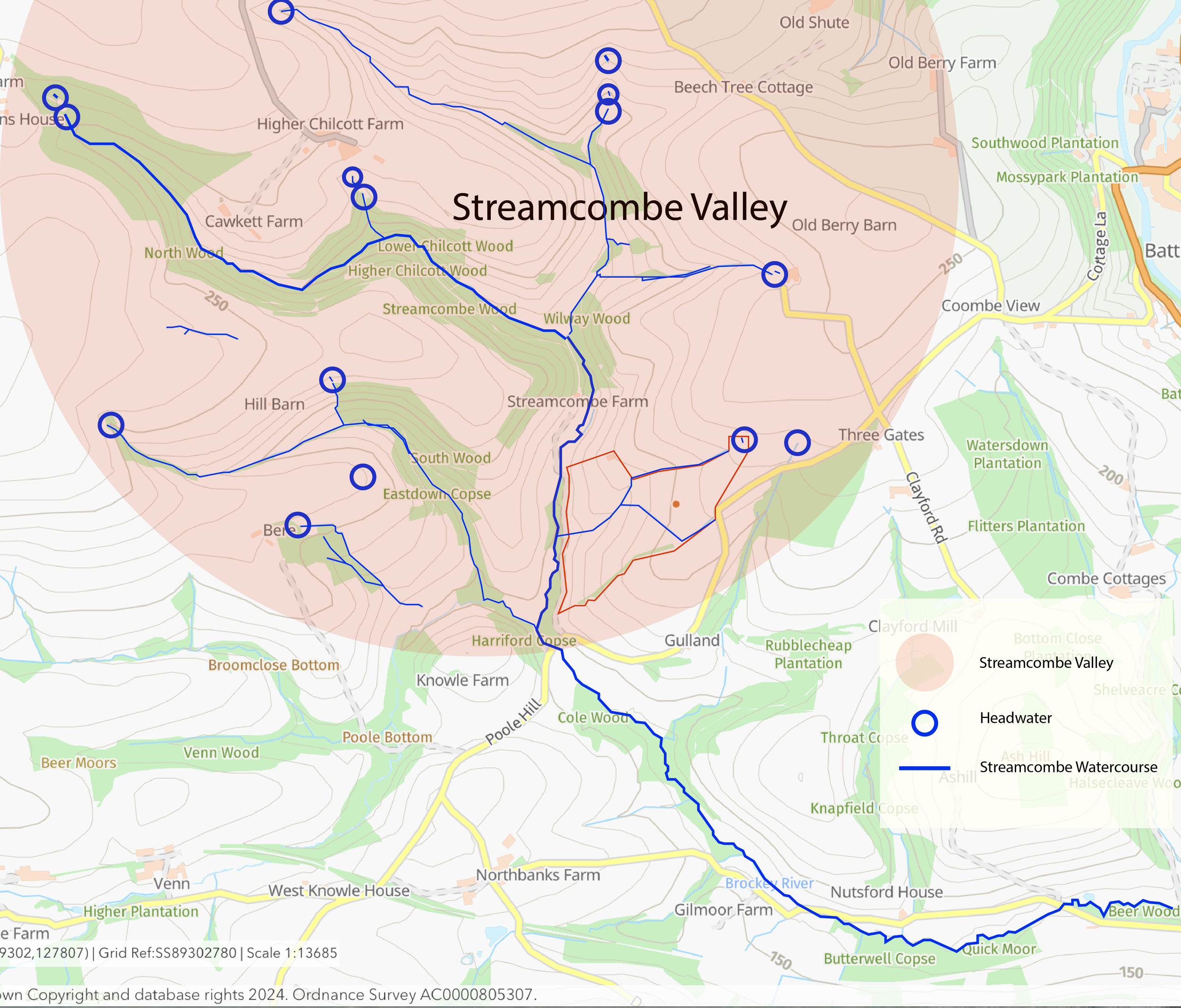
They affect water quality, flow behaviour, flood response, and the condition of habitats downstream.
Changes at the headwater level can travel through the entire river system, shaping conditions at a much larger scale.
What happens when they are altered
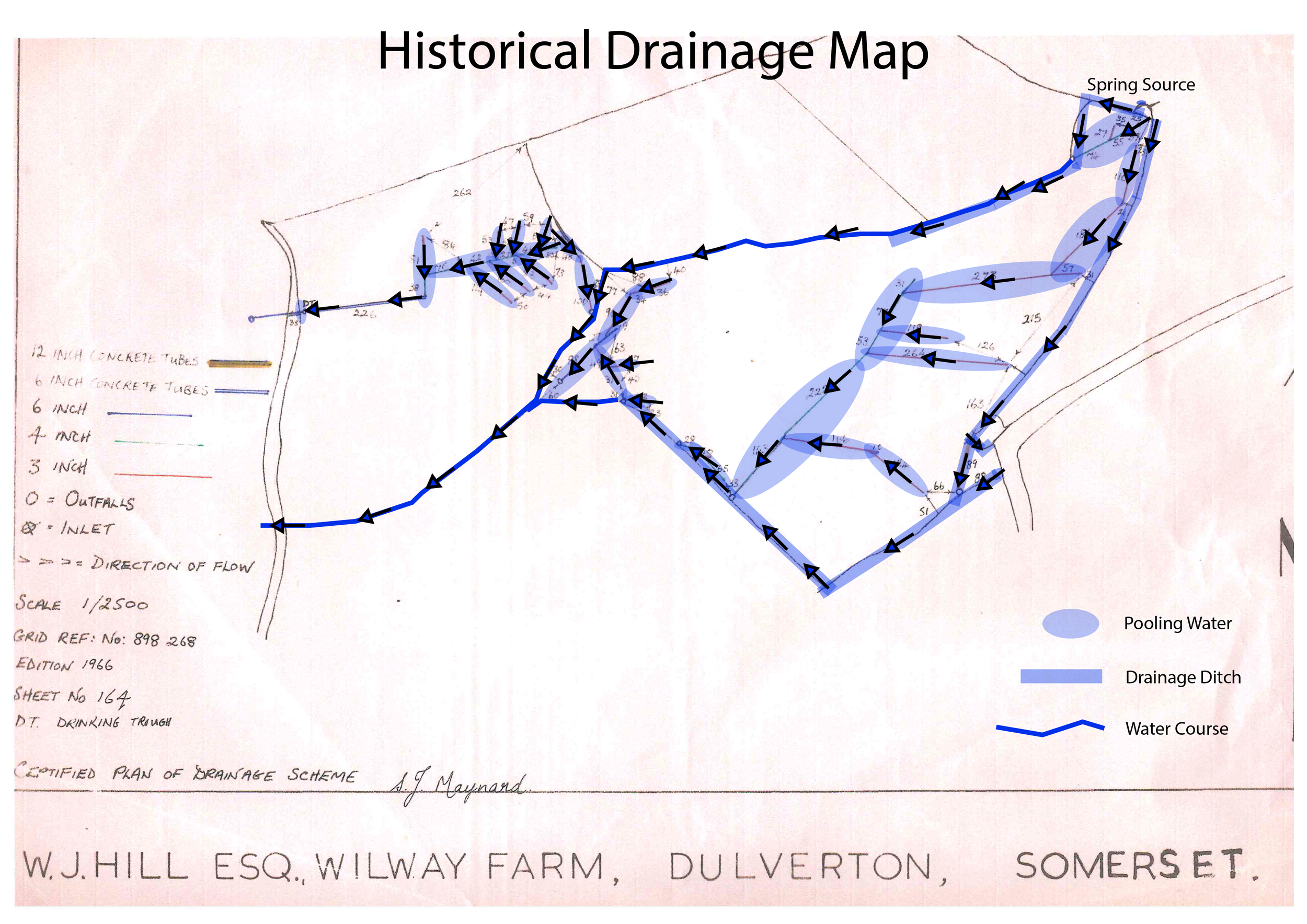
Many headwater systems have been modified through drainage, land management, and agricultural use.
These changes can reduce the land’s ability to hold water, increase flow speed, and limit natural wetness.
Over time, this can affect both the structure of the land and the behaviour of water moving through it.
These changes can still be seen in the land today.
Why this site matters
Wildwood Grove provides an opportunity to observe a headwater system following the removal of agricultural pressure.
The site is not being engineered or redesigned.
It is being observed as natural processes begin to re-emerge, offering a real-time record of how a headwater landscape behaves when conditions change.