Reality
Direct observation. Recorded conditions. Field evidence. No more than the site shows.
This page records what is being directly observed at Wildwood Grove through water, ground, life, weather, and repeated field observation.
Claims are kept proportionate to the evidence available. What is visible is recorded. What remains uncertain stays open.
Water
Water is being recorded here as direct field evidence, not assumption.
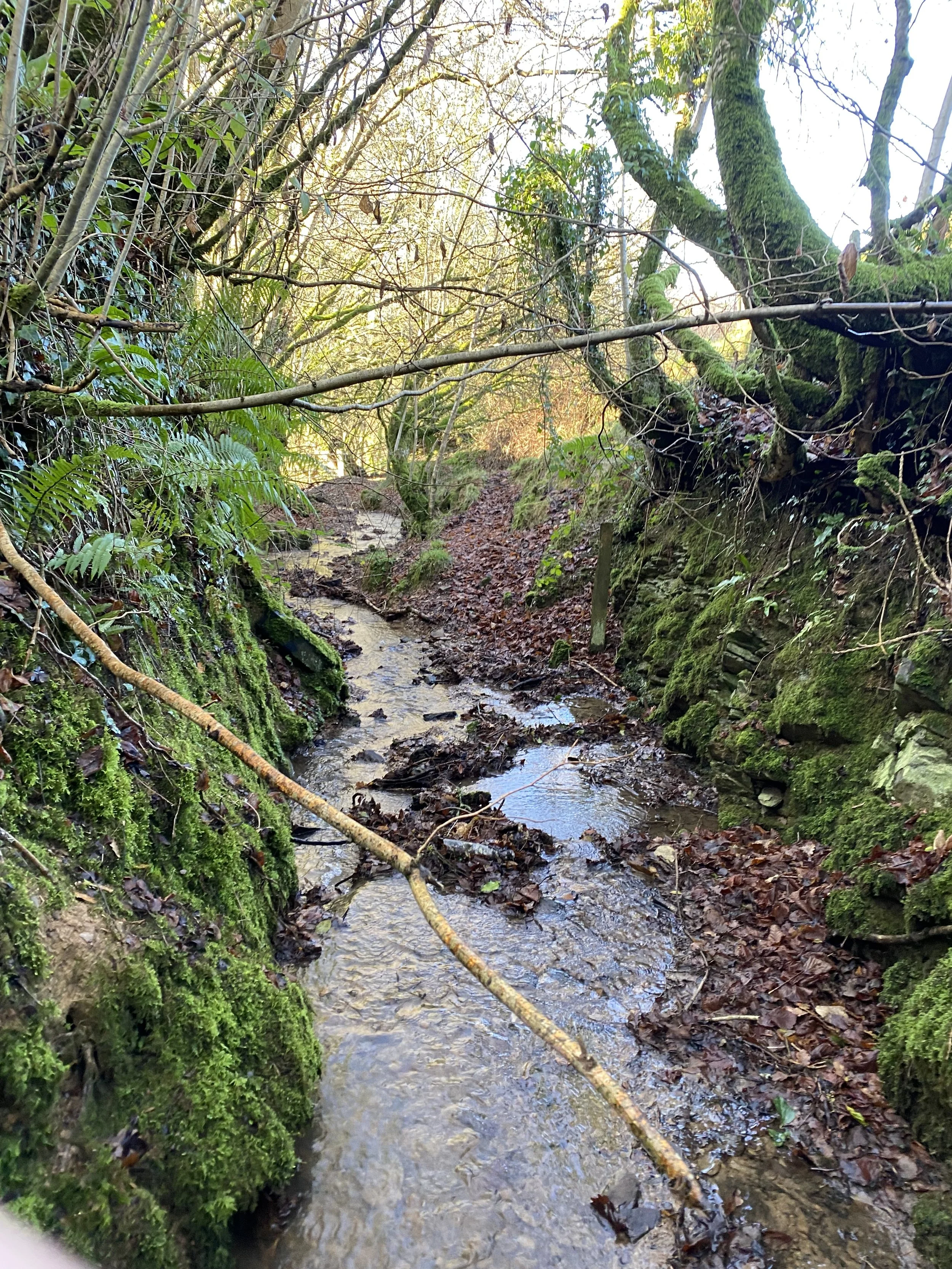
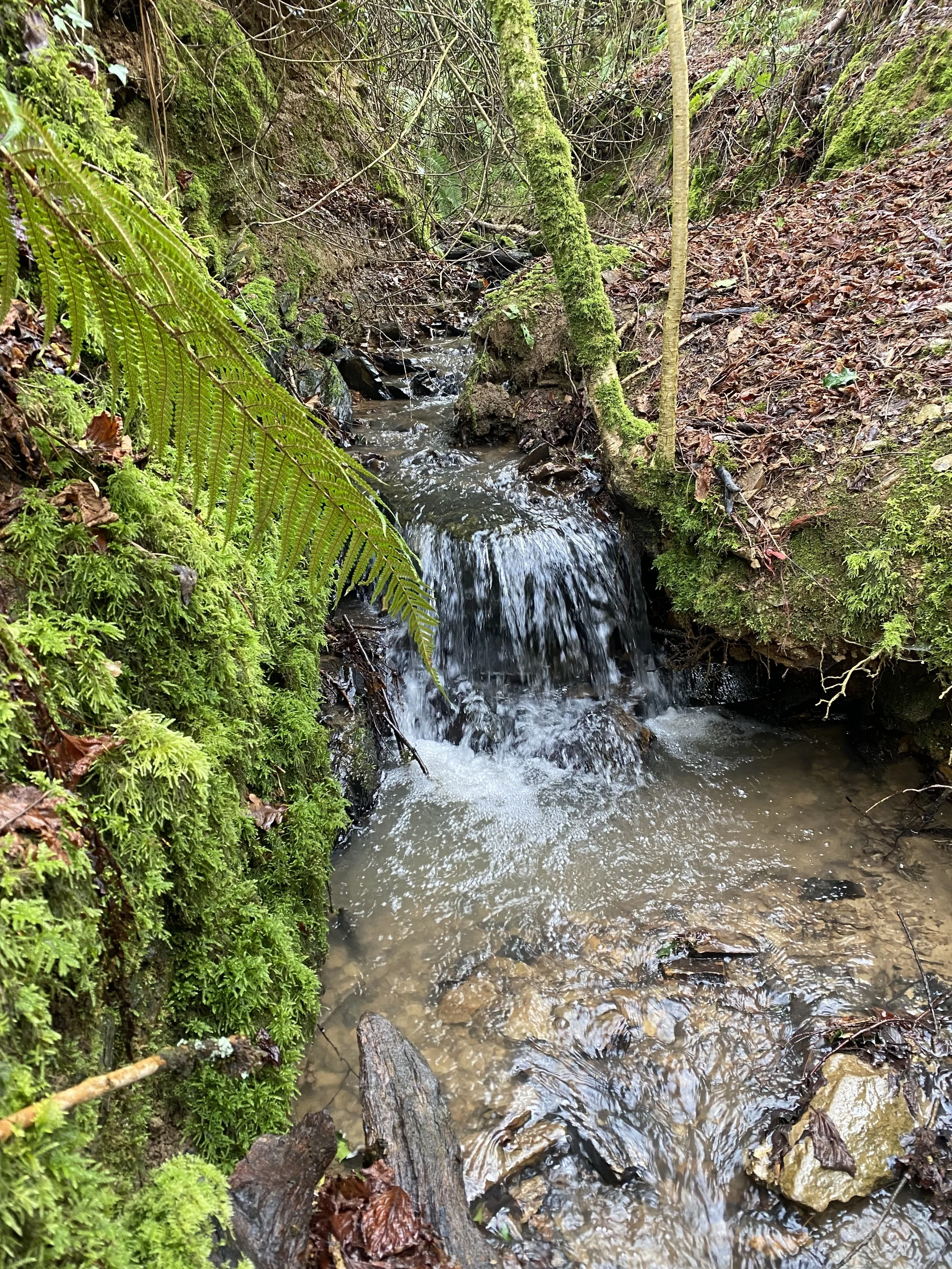
Current observations show low-flow groundwater emergence, localised pooling at the seep point, a visible downstream connection through the valley channel, and iron film behaviour at the surface.
A baseline field water test was carried out at the point of emergence under dry, baseflow conditions.
Indicative results show:
low nitrate and nitrite levels
no detectable chlorine
no hydrogen sulfide
moderate alkalinity and hardness
no immediate bacterial reaction during early incubation
Temperature readings taken across the system show variation between approximately 10–13°C within flowing sections, with cooler readings near the point of emergence and slightly warmer readings further downstream.
These early field results are consistent with a groundwater-fed source with low nutrient loading and no treated-water signal.
A thin surface film observed in pooled areas breaks into plate-like fragments when disturbed, consistent with naturally occurring iron oxidation where emerging groundwater meets air.
These observations are recorded as field evidence only. Laboratory validation has not yet been undertaken.
Ground
The ground across the site is being observed as a physical expression of water movement and retention.
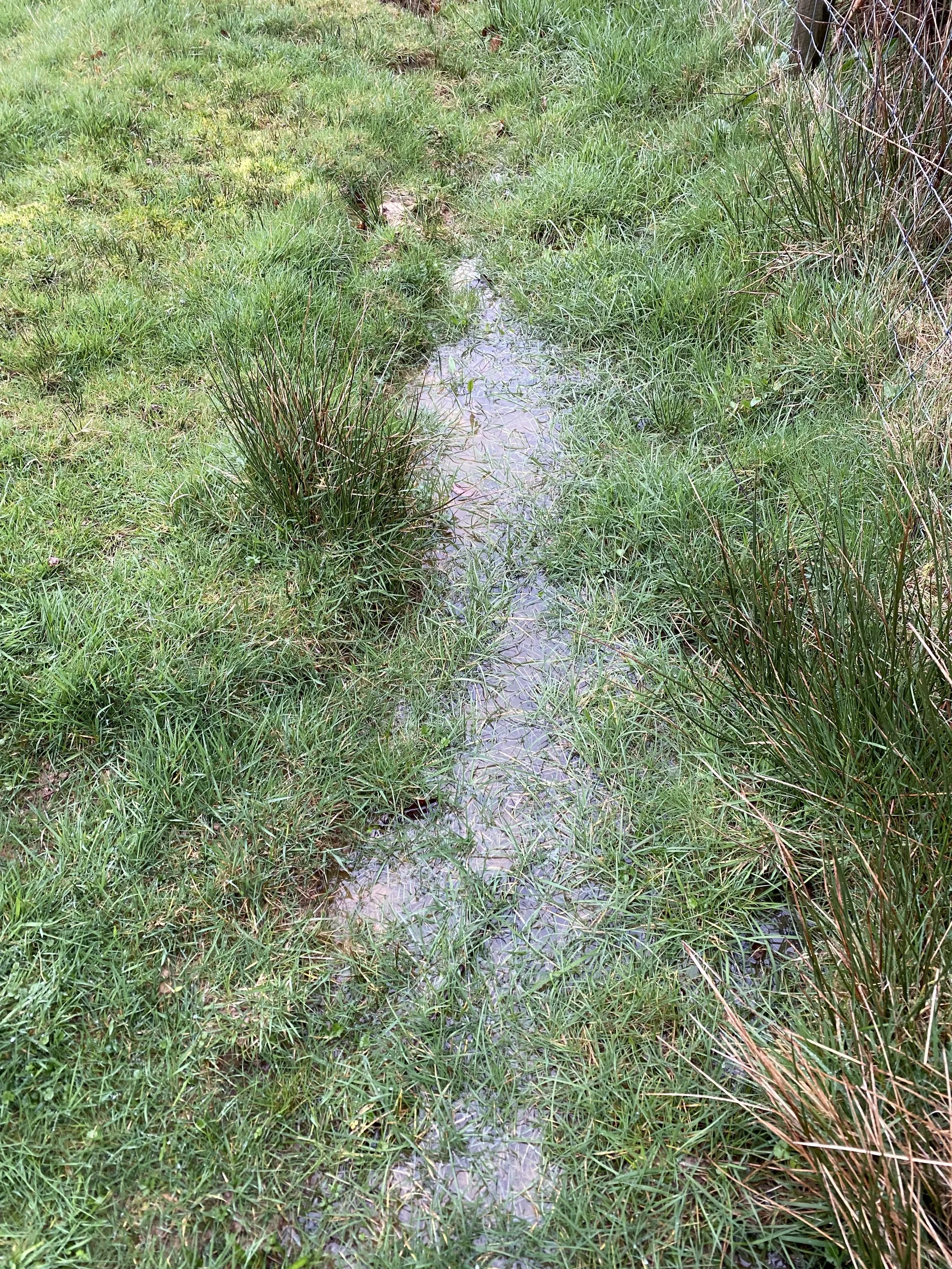
Current conditions show soft, saturated soils in low-lying areas, with persistent wetness remaining under dry weather conditions. Fine sediment is present within shallow pools and slow-flowing sections, with visible iron staining across the surface and within the soil profile.
Localized seepage zones are evident, including along boundary features such as historic hedge lines, where water appears to move through the subsurface and emerge at the surface.
These conditions are consistent with a landscape where water is being held within the soil and slowly released, rather than rapidly drained.
Observations are recorded directly from field conditions without intervention.
Life
Biological activity across the site is being recorded as a response to changing ground and water conditions.
Current observations include invertebrate presence within shallow water and saturated soils, including small worm-like organisms within pooled areas and slow-flowing sections.
Butterfly activity has been observed across the site, including multiple sightings of orange-tip butterflies, a species associated with damp grassland and moisture-dependent plant communities.
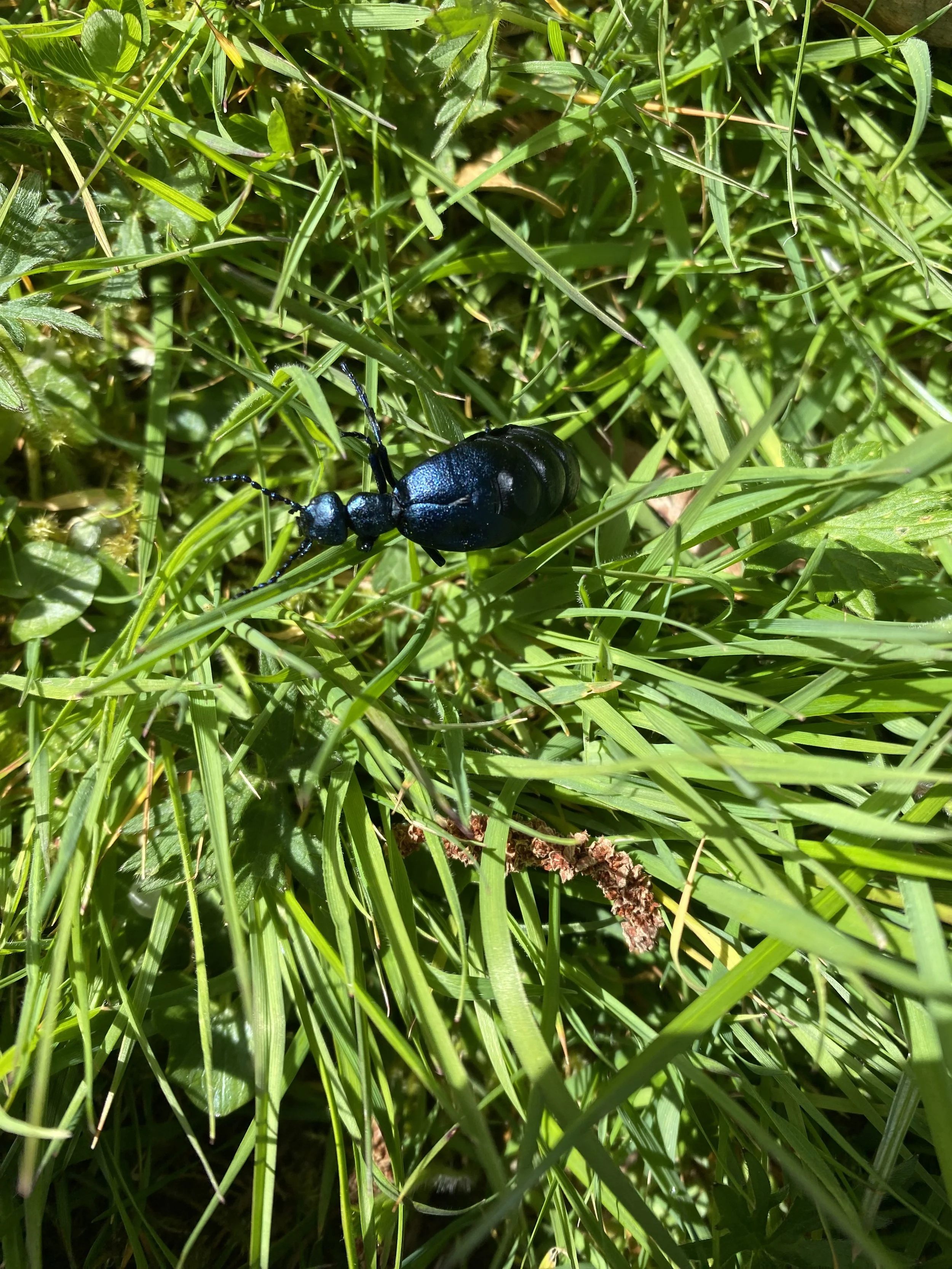
Additional observations include early signs of plant diversity returning in wetter areas, alongside evidence of bird activity and predation.
These observations indicate early-stage ecological response following the removal of agricultural pressure.
All biological activity is recorded as observed presence only. No formal species surveys have yet been undertaken.
Weather & Flow
The behaviour of water across the site is being observed in relation to weather conditions and seasonal change.
Under dry conditions, groundwater continues to emerge at the source, maintaining low but consistent flow through the valley channel and localized saturation across low-lying areas.
Following rainfall, early observations indicate increased surface connectivity, expansion of wet ground, and changes in flow speed and extent.
Temperature variation across the system suggests a combination of groundwater-fed flow and surface influence, with cooler readings near emergence points and more variable conditions in shallow or exposed areas.
These patterns are being recorded over time to understand how the system responds to changing conditions.
Observations remain ongoing and are not yet part of a formal monitoring programme.