Proven Natural Infrastructure
Beneath the Surface
Fresh Start is built on the understanding that water systems are not isolated features within a landscape.
They are connected processes.
What happens underground affects what happens on the surface.
What happens in the uplands affects what happens downstream.
Rainfall, geology, groundwater, springs, wetlands, rivers, habitats, infrastructure, biodiversity, and catchments all interact as part of one continuous environmental system.
To understand why Fresh Start works, the system itself must first be understood beneath the surface.
Wildwood Grove sits within a wider spring-fed upland landscape on the edge of Exmoor National Park. The site forms part of a connected valley network containing multiple spring-fed headwaters distributed throughout the wider catchment system.
The landscape functions as a natural water collection, storage, filtration, and delivery system.
The site itself operates as a combination of:
• high-point collection areas
• transitional mid-slope movement zones
• and lower valley convergence points where water naturally gathers, concentrates, and emerges through springs and headwater channels
Beneath the surface, geology controls how the system behaves.
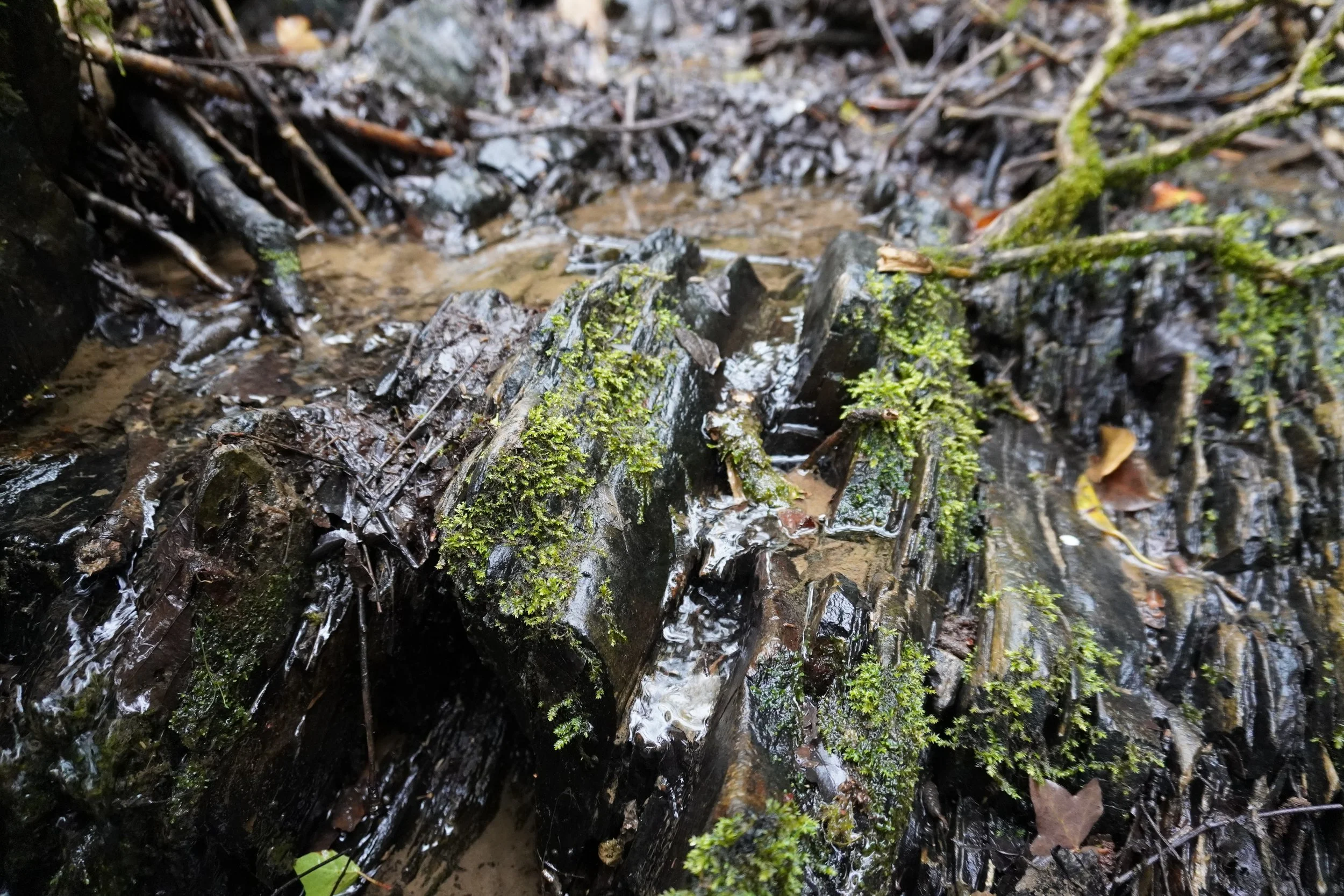
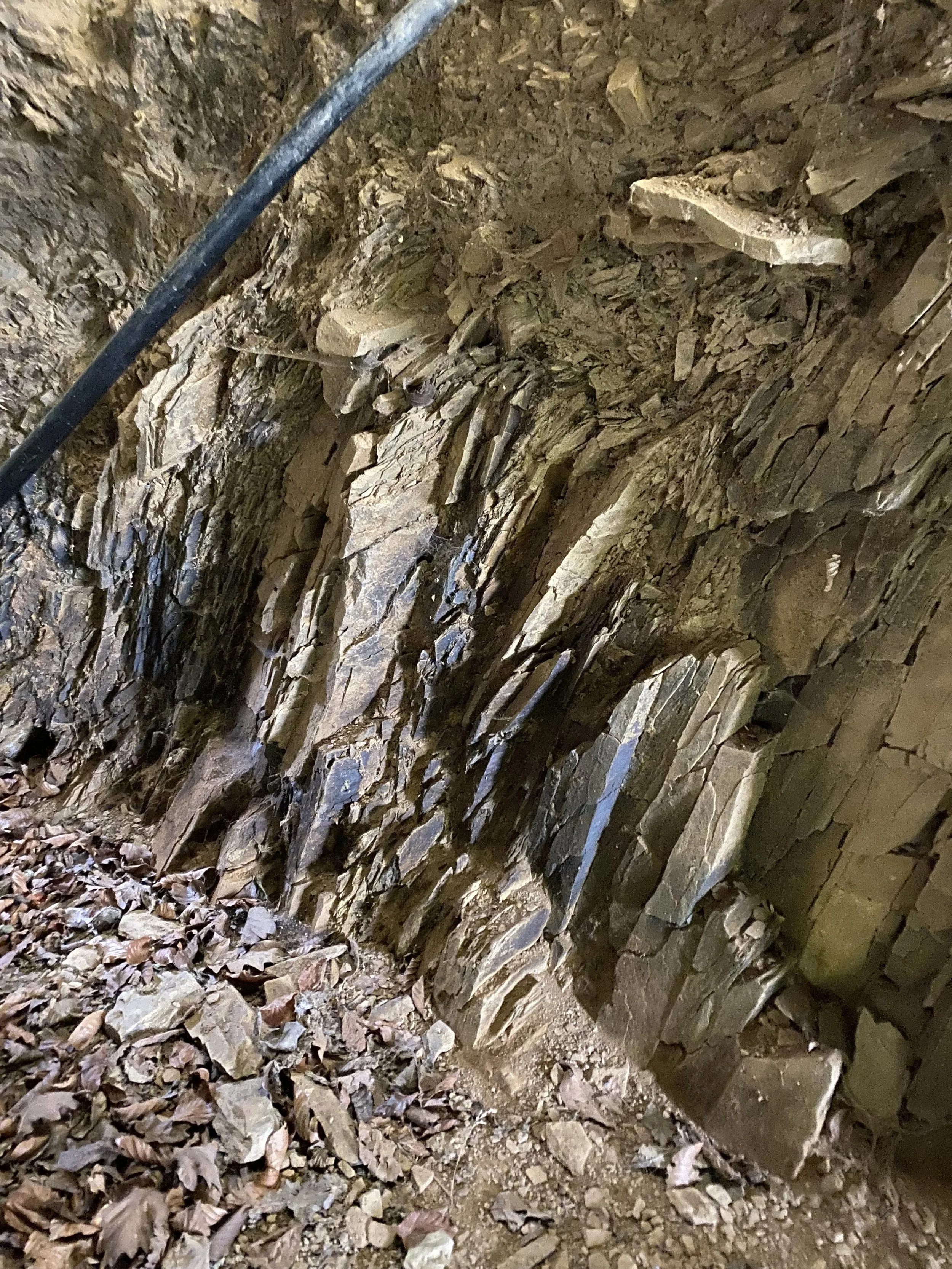
The underlying Pickwell Down and Baggy Sandstone formations naturally receive, store, filter, spread, and release rainfall through the landscape.
Combined with high Atlantic rainfall patterns across the uplands, this creates a hydrological system designed to absorb water, process it slowly, and deliver it naturally through springs, groundwater pathways, wetlands, and downstream catchment networks.
In many ways, it is the ultimate fresh start.
Without major artificial interference, water within this type of landscape naturally sinks, spreads, collects, meets, filters, slows, and gradually contributes to wider downstream river systems that ultimately flow from source to sea.
This is how functioning headwater systems behave.
Fresh Start is based on the understanding that many of these natural hydrological functions have not disappeared — they have been interrupted.
For decades, agricultural intensification across many upland systems introduced drainage networks, ditch systems, habitat removal, modified grassland, grazing compaction, fertiliser loading, and accelerated runoff pathways designed to maximise agricultural productivity and rapidly remove water from the land.
Physically, this alters how the landscape functions.
Natural retention processes become bypassed.
Water movement becomes accelerated.
Wetland formation becomes suppressed.
Habitat diversity declines.
Sediment transport increases.
Diffuse contaminants move more rapidly through the system.
Rainfall reaches downstream networks faster and with less natural filtration, storage, and regulation along the way.
In effect, a functioning hydrological system becomes converted into a rapid drainage and runoff system.
Fresh Start explores how restoring natural processes may help reverse some of these interruptions.
By gradually relaxing drainage systems, restoring wetland function, reintroducing water-retaining habitats, and reducing hydrological acceleration, the landscape is allowed to begin functioning more like the natural system it originally evolved to be.
This is not based on abstract theory alone.
Nearby upland wetland and moorland systems within the same regional landscape already demonstrate how these environments naturally behave under similar:
• geology
• rainfall patterns
• climatic conditions
• and ecological context
These local reference systems provide observable working models of how functioning upland headwaters naturally regulate water movement, support biodiversity, retain moisture, filter contaminants, and contribute to wider catchment resilience.
The key difference is often not the natural system itself.
The key difference is the level of agricultural constraint and hydrological suppression placed upon it.
Fresh Start therefore treats the natural landscape as the operational blueprint.
The initiative does not seek to artificially invent new environmental systems. Instead, it explores how interrupted systems may be gradually guided back toward healthier hydrological and ecological function through monitored, staged, evidence-backed intervention.
Physically, slowing the flow changes how the entire system behaves.
When water is retained within wetlands, vegetation, soils, ponds, scrapes, shallow flood zones, and groundwater pathways for longer periods of time:
• peak runoff pressure can reduce
• sediment movement can slow
• contaminants have greater opportunity to settle or filter
• groundwater interaction can increase
• ecological diversity can expand
• habitats become more stable
• and downstream systems experience less sudden hydraulic pressure
Wetlands are not passive habitats.
They are working environmental systems.
They store, regulate, filter, absorb, connect, buffer, and gradually release water through the landscape over time.
This is why headwaters matter.
The beginning of the water journey influences everything downstream.
Fresh Start is built on the principle that prevention is more effective than constant downstream repair.
If water enters the wider catchment in a healthier, cleaner, slower, and more resilient condition, the entire connected system benefits.
Because ultimately, water systems are not separate systems.
They are one connected process moving through the landscape.
Fresh Start explores what happens when that process is allowed to function more naturally once again.