

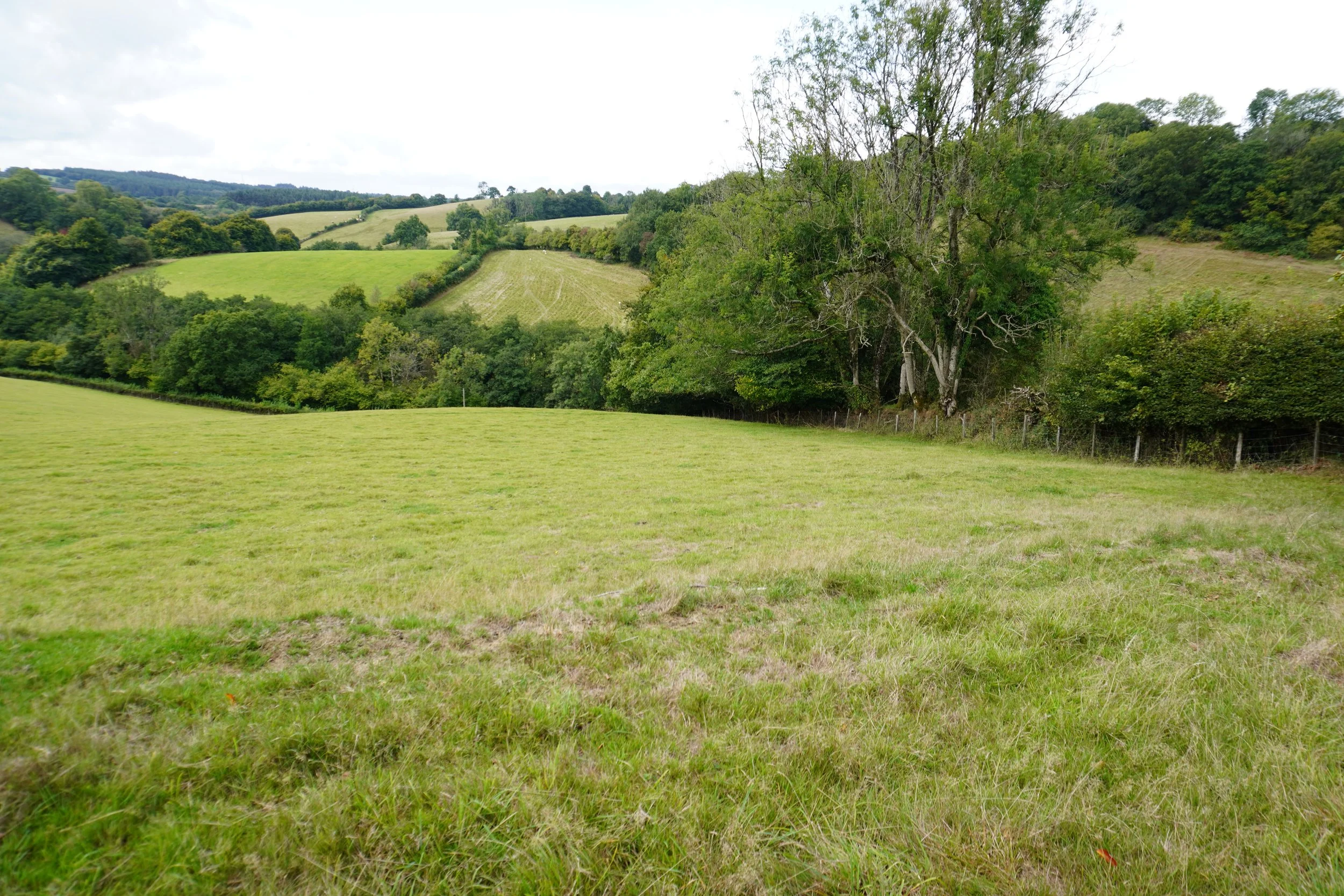
Land Regeneration in Practice
Land Regeneration in Practice
Wildwood Grove is undergoing a transition from conventional agricultural management to ecological regeneration.
Following the cessation of grazing in November 2025, the site entered a period of observation to understand how natural processes begin to reassert themselves once intensive land management ends.
This approach recognises that landscapes contain inherent ecological capacity. By allowing soils, hydrology and vegetation to recover naturally, it becomes possible to understand how the land wants to function before restoration work is undertaken.
A Landscape in Transition
For generations, the valley landscape surrounding Wildwood Grove has been managed for agriculture. Drainage networks, grazing pressure and land management practices have shaped how water and vegetation behave across the site.
With the removal of grazing pressure, early observations suggest that the land is beginning to respond quickly. Areas of persistent wetness are becoming more visible, natural vegetation is re-establishing along wetter corridors and groundwater emergence points are becoming easier to identify.
These early signals provide valuable information about how the landscape historically functioned and how it may recover under more natural conditions.
Soil and Ecological Recovery
Healthy soils are fundamental to ecological restoration.
Over time, agricultural management can alter soil structure, organic matter levels and the biological communities that support ecosystem function. Allowing the land to rest provides an opportunity for soil systems to begin recovering naturally.
At Wildwood Grove, understanding soil condition forms part of the wider ecological baseline work being undertaken to guide long-term restoration planning.
Improving soil health supports water retention, plant diversity and the wider ecological processes that underpin resilient landscapes.
Long-Term Stewardship
Land regeneration is not a short-term intervention but a long-term commitment.
The restoration strategy at Wildwood Grove is being developed to support the gradual recovery of ecological processes across the site, allowing natural systems to shape the future landscape.
By combining careful observation, scientific assessment and process-led restoration, the project aims to demonstrate how agricultural land can transition toward functioning ecological landscapes capable of supporting biodiversity, improving water resilience and contributing to wider environmental recovery.