

Research & Monitoring
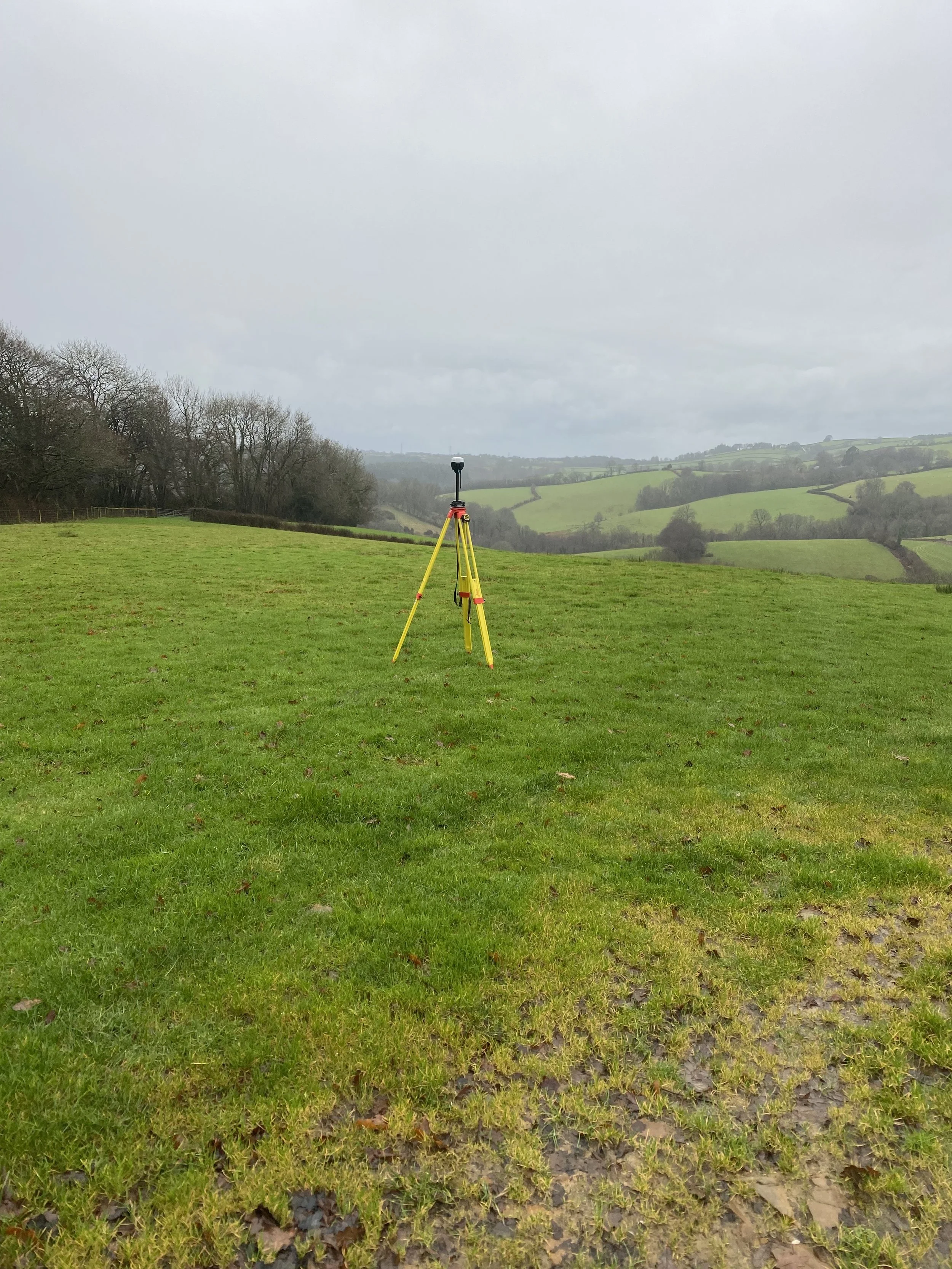
About the Research Opportunity
Wildwood Grove is opening part of its landholding to the scientific community as it enters a long-term programme of ecological restoration following the cessation of agricultural use.
Researchers are invited to engage with the site from an early stage, with the opportunity to observe current conditions, establish independent baselines, and continue studies as the land transitions into the habitat types it naturally supports.
The intention is to provide real land, early access, and long-term continuity, while allowing researchers full independence in defining research questions, methods, and outputs. Research at Wildwood Grove is observational and analytical in nature, focused on understanding ecological processes and responses over time rather than determining predefined outcomes.
All research and monitoring at Wildwood Grove is grounded in a clear understanding of how the land behaves before intervention.”
Before Intervention: Early Observation
At Wildwood Grove, research and monitoring do not begin after restoration — they begin before it.
The land entered our stewardship in November 2025 following decades of agricultural use. Since then, no re-profiling, ditching, damming, planting, or nature-based solutions have been introduced. This is a deliberate choice.
Before intervening, we are taking time to understand how the land already behaves.
The site contains two identified springs and a naturally forming headwater watercourse that feeds into the Brockey and wider River Exe catchment. Since taking ownership, we have observed persistent wetness, seasonal flow variability, early wetland formation, and clear signs of long-term grazing and nutrient legacy — much of which is not fully captured by historic mapping or standard models.
Acting too early risks fixing the wrong problem.
By observing first, we are able to:
Understand how water moves, pools, emerges, and retreats across seasons
Distinguish between surface flow, groundwater influence, and spring behaviour
Establish an honest baseline for nutrients, soils, vegetation, and hydrology
Identify where intervention would help — and where restraint is more appropriate
This period of early observation is not passive. It is structured, documented, and continuous. It provides the reference point against which all future restoration, monitoring, and management decisions will be judged.
Some questions only have value before land is altered.
Wildwood Grove is committed to letting the land show us how it functions — before deciding how best to support its recovery.
The Site
Wildwood Grove is a privately owned site in Somerset comprising approximately 29.08 acres of land.
A minimum of 25 acres is being made available for scientific study and research.
The land has historically been used for grazing, which ceased in November 2025. The site is now ungrazed and is being stewarded under a long-term ecological management approach by Wildwood Grove.
Hydrological Context
The site exhibits a strong hydrological influence, including:
Two identified springs
Evidence of seasonal headwater behaviour
A watercourse running through the site that feeds the Brockey, which in turn feeds the River Exe catchment
Hydrology is expected to act as a primary organising system for ecological change across the site, influencing habitat development, soil processes, and biodiversity dynamics over time.
Current Data & Surveys
Available and planned data and assessments include:
Defra MAGIC spatial datasets
Living England habitat mapping
Ecological baseline survey (in progress)
Hydrology Phase 1 assessment (planned)
Further ecological Phase 2 surveys and monitoring frameworks will follow as part of the wider restoration and stewardship process.
Ecological Restoration Approach
Habitat restoration and creation at Wildwood Grove will be guided by:
Hydrological assessment
Ecological Phase 2 surveys
A Habitat Management and Monitoring Plan (HMMP)
Biodiversity Net Gain (BNG) metric outputs
Restoration is designed to be process-led, informed by site conditions and ecological function rather than imposed outcomes. This allows the land to develop into the habitat types it naturally supports over time.
Research activity is separate from statutory habitat delivery obligations. Scientific findings do not redefine, override, or determine compliance with habitat creation, management, or legal agreements.
Long-Term Land Security
The land will be legally secured for ecological use for a minimum of 30 years, providing a level of continuity that is rarely available within private land contexts.
This long-term horizon supports sustained observation, monitoring, and longitudinal research across multiple ecological timescales.
What Is Being Offered
Researchers are offered:
Access to a minimum of 25 acres of land
A guaranteed minimum 30-year window of land continuity
The opportunity to begin work prior to physical habitat creation
Up to one year to study the land in its current post-grazing state
The option to continue research as restoration unfolds
This enables researchers to:
Establish independent baselines
Study early ecological change following agricultural cessation
Observe and measure system responses over time
Research Scope
The site is open to research across environmental and natural science disciplines, including but not limited to:
Hydrology and catchment science
Ecology and biodiversity recovery
Freshwater and riparian systems
Soil science and microbiology
Biogeochemistry
Climate and microclimate
Systems science and ecological complexity
Interdisciplinary and systems-based approaches are welcomed.
Stewardship & Research Independence
Wildwood Grove provides:
Land access
Long-term continuity
Ecological stewardship
Wildwood Grove does not direct research questions, define outcomes, or claim ownership of research data. Researchers retain full academic independence and publication rights. Land management and stewardship decisions remain the responsibility of Wildwood Grove.
Knowledge & Learning
Findings generated through research at Wildwood Grove contribute to a growing body of longitudinal ecological understanding. Insights gained may inform the design, stewardship, and restoration strategy of future sites, supporting continuous improvement across land restoration projects.
How to Engage
Researchers interested in accessing the site are invited to make contact to discuss:
Areas of interest
Timescales
Practical access considerations
Initial engagement is intentionally light-touch and exploratory.
Contact:
info@wildwoodgrove.co.uk
Closing Note
This is an opportunity to study a real landscape that has recently exited agricultural use and is entering long-term ecological restoration, with the benefit of early access, long-term continuity, and full scientific independence.