
Physical Landscape Development
What physical processes shaped the Wildwood Grove landscape before documented agricultural management?
Evidence Sources
The information presented on this page is derived from:
Geological and Soils Technical Note, Geckoella, 2026
River Restoration Centre site assessment, 2026
Historical drainage scheme mapping, 1966
LiDAR topographic analysis
Historical mapping and field observations
Overview
Wildwood Grove occupies part of a small headwater valley within the upper River Exe catchment near Dulverton, Somerset.
The landscape predates agricultural management and has developed through the interaction of:
Bedrock geology
Groundwater movement
Spring emergence
Surface water flow
Erosion and deposition processes
These processes created the valley, slopes, drainage pathways and spring systems that form the physical structure of the site today.
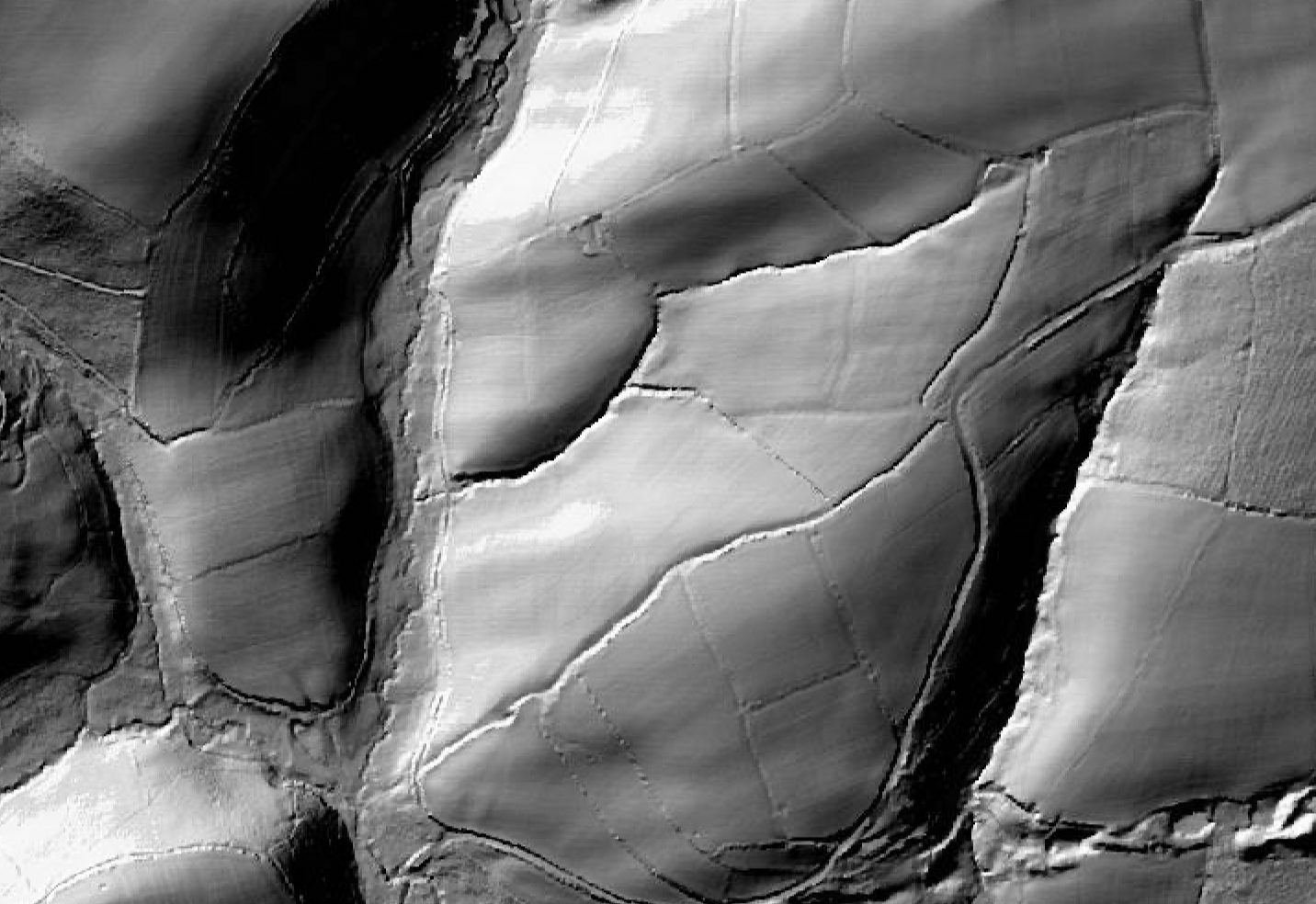
Figure 1. LiDAR topographic image of the Streamcombe headwater landscape
LiDAR evidence showing valley form, slope structure, headwater depressions and natural drainage pathways.
Geological Foundation
The site is underlain by the Upper Devonian Baggy Sandstones Formation, comprising sandstone, siltstone and mudstone deposited approximately 359–372 million years ago.
This bedrock forms the geological foundation of the wider Streamcombe Valley landscape and influences both groundwater movement and surface water drainage patterns across the site.
Valley Formation
LiDAR mapping shows Wildwood Grove occupying the upper reaches of a small tributary valley within the Streamcombe Valley system.
The surrounding landscape is characterised by:
Undulating upland topography
Steep-sided valley slopes
Converging drainage pathways
Distinct valley-head features
The site occupies part of a natural headwater corridor where water gathers before flowing into the wider Streamcombe watercourse network.
Groundwater and Spring Development
Groundsure mapping identifies the underlying geology as a Secondary A Aquifer.
The River Restoration Centre recorded that groundwater-fed springs remain visible on the site and correspond with locations shown on historical mapping.
These springs emerge within the upper part of the valley and contribute water to the site’s drainage network and watercourses.
The presence of multiple spring emergence points indicates that groundwater movement has been an important factor in shaping the local landscape.
Headwater Landscape
Mapping of the wider Streamcombe Valley identifies numerous headwater sources distributed throughout the surrounding catchment.
These headwaters combine through a network of tributaries that form the Streamcombe watercourse before flowing downstream into the Brockey River and ultimately the River Exe.
Wildwood Grove forms part of this wider headwater landscape.
Natural Drainage Features
LiDAR analysis identifies a series of shallow depressions, flow pathways and valley-head features across the site.
The River Restoration Centre observed that several of these features remain associated with spring emergence and wet ground conditions.
These landscape features indicate the long-term influence of groundwater and surface water movement on the development of the site.
Evidence of Wet Ground Conditions
A certified agricultural drainage scheme was installed across parts of the site in 1966.
The drainage plan records an extensive network of field drains connected to ditches and outfalls.
The existence of this drainage infrastructure provides evidence that wet ground conditions were present prior to installation of the drainage scheme.
The River Restoration Centre recorded that the drainage network remains connected to the ditch system present on the site today.
Physical Landscape Components
The principal physical landscape features currently identified at Wildwood Grove include:
Upper Devonian Baggy Sandstone bedrock
Secondary A Aquifer geology
Groundwater-fed springs
Headwater drainage pathways
Valley-head landforms
Shallow depressions and wet ground features
Tributary watercourses
Streamcombe Valley headwater corridor
Sloping upland topography